
Therapy to Recover from Affair and Infidelity in California
Recovering from an affair or infidelity is one of the most challenging emotional journeys a person or couple can undertake.
The betrayal shatters trust, disrupts emotional bonds, and often leaves both partners grappling with intense feelings of pain, anger, shame, and confusion.
Therapy offers a structured, compassionate pathway to navigate this turmoil, rebuild trust, and foster healing, whether the goal is to restore the relationship or find personal closure.
This article explores the therapeutic process for recovering from infidelity, emphasizing practical steps, emotional strategies, and the importance of professional guidance in addressing the complex dynamics of betrayal.

Understanding the Impact of Infidelity
Infidelity, whether emotional, physical, or both, creates a profound rupture in a relationship. The betrayed partner often experiences a sense of trauma, marked by intrusive thoughts, hypervigilance, and a loss of safety in the relationship.
The partner who engaged in the affair may wrestle with guilt, defensiveness, or ambivalence about their actions. Both individuals may feel isolated, unsure of how to communicate or process their emotions effectively.
The emotional aftermath of infidelity can resemble post-traumatic stress, with symptoms such as anxiety, depression, or difficulty concentrating. These reactions are normal responses to a significant breach of trust.
Therapy provides a safe space to acknowledge these feelings without judgment, helping individuals and couples understand the deeper implications of the affair and its triggers.
Infidelity often stems from underlying issues, such as unmet emotional needs, poor communication, or unresolved personal struggles.
While these factors do not excuse the betrayal, exploring them in therapy can illuminate patterns that contributed to the affair and guide the healing process. Recovery involves not only addressing the immediate pain but also examining the relationship’s foundation to prevent future betrayals.
The Role of Therapy in Affair Recovery
Therapy serves as a cornerstone for navigating the complexities of infidelity recovery. A skilled therapist acts as a neutral guide, facilitating open communication, fostering empathy, and helping both partners process their emotions constructively. Whether pursued individually or as a couple, therapy offers tools to rebuild trust, enhance emotional intimacy, and create a roadmap for moving forward.
In many cases, a combination of individual and couples therapy is most effective. Individual therapy allows each partner to process their emotions privately, while couples therapy focuses on repairing the relationship. This dual approach ensures that personal healing aligns with relational growth, creating a stronger foundation for recovery.
For the betrayed partner, individual therapy provides a space to process feelings of hurt, anger, and insecurity.
It helps them regain a sense of self-worth, which is often eroded by the affair. Therapy can also assist in managing triggers, such as intrusive thoughts about the affair, and developing coping strategies to handle emotional distress.
For the partner who engaged in the affair, individual therapy focuses on understanding the motivations behind their actions.
This might involve exploring personal insecurities, unresolved trauma, or patterns of behavior that led to the betrayal. Taking responsibility without defensiveness is a critical step, and therapy supports this process by encouraging self-reflection and accountability.
Couples therapy is often a vital component of affair recovery, particularly when both partners are committed to rebuilding the relationship.
The therapist helps create a safe environment where both individuals can express their feelings honestly. This involves addressing the pain of the betrayal while fostering mutual understanding and empathy.
One of the primary goals of couples therapy is to rebuild trust. This is a gradual process that requires consistent effort from both partners.
The therapist may guide the couple in setting boundaries, improving communication, and establishing new patterns of interaction that prioritize transparency and emotional safety.
Key Steps in the Therapeutic Process
Recovering from infidelity is a nonlinear journey that requires patience, commitment, and intentional effort. The following steps, often facilitated through therapy, provide a framework for healing.
Acknowledging the Pain
The first step in recovery is acknowledging the emotional impact of the affair. For the betrayed partner, this means expressing their hurt, anger, and sense of betrayal without fear of judgment. For the partner who had the affair, it involves listening to their partner’s pain, taking responsibility for their actions, and resisting the urge to minimize or justify the betrayal.
Therapists often use techniques such as active listening and guided dialogue to help couples navigate these difficult conversations. Validating each partner’s emotions creates a foundation for mutual understanding and sets the stage for deeper healing.
Creating Transparency
Transparency is essential for rebuilding trust. This involves the partner who had the affair being fully honest about the details of the betrayal, as agreed upon by both partners. While some couples benefit from full disclosure, others may find that certain details are too painful or unhelpful. A therapist can help determine what level of transparency is appropriate for the couple’s unique situation.
Transparency also extends to ongoing behavior. The partner who had the affair may need to demonstrate accountability through actions such as sharing passwords, checking in regularly, or avoiding situations that could trigger suspicion. These measures, when approached collaboratively, help restore a sense of safety.
Rebuilding Trust
Trust is rebuilt through consistent, reliable actions over time. Small, intentional gestures—such as keeping promises, being punctual, or showing emotional vulnerability—can gradually restore faith in the relationship. Therapists often encourage couples to practice “trust-building behaviors,” such as expressing appreciation or engaging in shared activities that foster connection.
For the betrayed partner, rebuilding trust involves a willingness to take emotional risks. This can be challenging, as fear of further betrayal may linger. Therapy provides tools to manage these fears, such as mindfulness techniques or cognitive restructuring, which help reframe negative thought patterns.
Improving Communication
Effective communication is critical for affair recovery. Many couples struggle to discuss the affair without escalating into arguments or shutting down emotionally. Therapy teaches communication skills, such as active listening, using “I” statements, and avoiding blame. These tools help couples express their needs and feelings constructively.
Therapists may also introduce exercises to enhance emotional intimacy, such as sharing daily reflections or discussing long-term goals. These practices strengthen the couple’s connection and create opportunities for positive interactions.
Addressing Underlying Issues
Infidelity often highlights underlying issues in the relationship or within each partner. These might include poor conflict resolution, unmet emotional needs, or differing expectations about intimacy. Therapy provides a space to explore these dynamics and develop healthier patterns.
For example, a therapist might help the couple identify “emotional bids”—moments when one partner seeks connection or support—and teach them how to respond effectively. Addressing these underlying issues not only aids in recovery but also strengthens the relationship for the future.
Fostering Forgiveness
Forgiveness is a deeply personal process that does not necessarily mean condoning the affair. Instead, it involves letting go of resentment and choosing to move forward, whether together or apart. For some, forgiveness is a spiritual or emotional release; for others, it is a practical decision to focus on healing.
Therapists guide couples through forgiveness by encouraging empathy and perspective-taking. This might involve helping the betrayed partner understand the context of the affair (without excusing it) or supporting the partner who had the affair in making amends through consistent, trustworthy behavior.
Redefining the Relationship
Recovering from infidelity often leads to a redefined relationship. Couples may establish new boundaries, renegotiate roles, or set fresh goals for their partnership. This process can be empowering, as it allows both partners to co-create a relationship that aligns with their values and needs.
Therapy supports this redefinition by helping couples identify what they want their relationship to look like moving forward. This might involve exploring shared values, creating rituals of connection, or addressing practical concerns such as parenting or finances.
The Importance of Patience and Commitment
Healing from infidelity is not a quick process. It requires time, effort, and a willingness to face discomfort. Setbacks, such as moments of doubt or triggered emotions, are normal and do not indicate failure.
A therapist can help couples navigate these challenges by reframing setbacks as opportunities for growth and reinforcing their progress.
Both partners must be committed to the process, even when it feels challenging. For the betrayed partner, this might mean staying open to rebuilding trust despite lingering pain.
For the partner who had the affair, it involves consistently demonstrating accountability and empathy. Therapy provides the structure and support needed to maintain this commitment.
Therapy supports this redefinition by helping couples identify what they want their relationship to look like moving forward. This might involve exploring shared values, creating rituals of connection, or addressing practical concerns such as parenting or finances.
When to Seek Professional Help

While some couples attempt to navigate infidelity recovery on their own, professional therapy offers unique benefits.
A therapist brings expertise in managing complex emotions, facilitating productive conversations, and addressing relational dynamics. They can also help couples determine whether reconciliation is feasible or if parting ways is the healthiest option.
Signs that therapy may be beneficial include.
- Persistent feelings of anger, sadness, or disconnection.
- Difficulty communicating without escalating into conflict.
- Ongoing mistrust or suspicion.
- A desire to rebuild the relationship but uncertainty about how to start.
When choosing a therapist, look for someone with experience in affair recovery or trauma-focused therapy. A good therapist will create a nonjudgmental space, tailor their approach to the couple’s needs, and provide practical tools for healing.
Moving Forward
Through counselling, recovery becomes a space where pain is acknowledged, patterns are understood, and resilience is built. Whether you’re healing from trauma, addiction, emotional wounds, or personal struggles, recovery empowers you to reclaim your sense of self, restore inner peace, and move forward with strength and clarity. It’s about progress, not perfection — and you don’t have to do it alone.
From Start to Finish: Therapy & Counseling in 3 Steps
1.
Book a free initial consultation to share your concerns and explore how therapy can support your mental health goals.
2.
After understanding your needs, your therapist will design a personalized therapy plan, incorporating approaches like CBT or mindfulness to address your unique challenges.
3.
Begin your therapy sessions—available in-person or online—with flexible scheduling options, and let your therapist guide you toward growth and emotional well-being.

Our Experience
Keyword Ideas (anxiety therapist near me, anxiety and OCD therapist, online anxiety therapy California, social anxiety California, relationship anxiety therapist)
Have Questions? We’ve Answers for You.
Find answers to your questions about therapy, Muna’s services and specialization, Insurance, or privacy here.
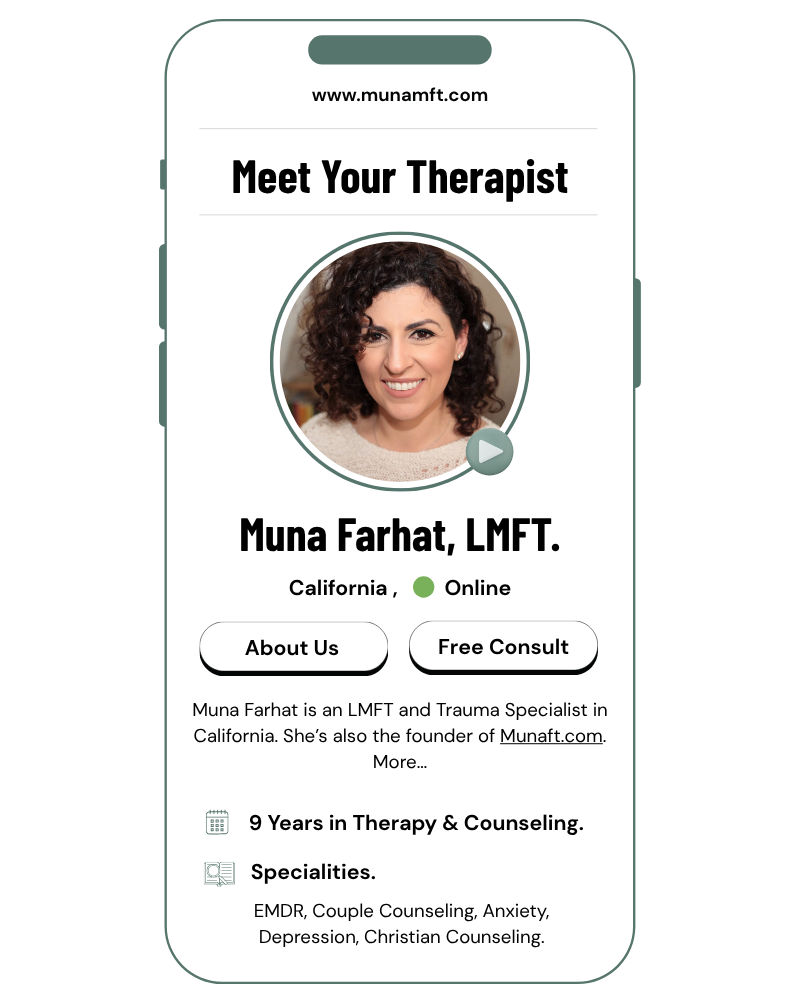
Muna Farhat, LMFT is a Licensed Marriage and Family Therapist based in San Jose, CA.
She holds the necessary credentials to practice therapy in California, with expertise in supporting individuals, couples, and families through various emotional and relational challenges.
As a Licensed Marriage and Family Therapist, Muna adheres to strict confidentiality standards outlined by California state law and the Health Insurance Portability and Accountability Act (HIPAA).
Your personal information is securely stored and only shared with your explicit consent, except in legally mandated situations.
Therapy is a collaborative process where you work with a trained professional, like Muna, to address emotional, mental, or relational challenges. It can help you gain insight, develop coping strategies, and achieve personal growth or resolution of specific issues.
Counseling and therapy are often used interchangeably, but counseling typically focuses on specific issues or short-term goals (e.g., coping with a life transition), while therapy may involve deeper exploration of long-standing patterns. Muna offers both, depending on your needs.