
What is Betrayal Trauma?
Betrayal trauma arises when a trusted individual—such as a partner, family member, or close friend—or an institution, like a workplace or community, violates the confidence placed in them.
Unlike other forms of trauma, betrayal trauma is rooted in the relational harm caused by someone or something depended upon for support. This violation can lead to intense emotional pain, confusion, and a shaken sense of security, often leaving individuals struggling to rebuild trust in themselves and others.


Betrayal Trauma: Causes and Effects
Betrayal trauma occurs when someone experiences a profound breach of trust by a person or institution they rely on for emotional or physical safety.
This type of trauma can deeply affect mental health, relationships, and overall well-being. This article explores the causes of betrayal trauma, its symptoms, and its impact.
Feeling shattered by betrayal trauma? Heal and rediscover your strength with compassionate guidance from Muna Farhat. Take the first step toward recovery—book your free consultation today.
Causes of Betrayal Trauma
Betrayal trauma stems from actions or events that shatter trust in a significant relationship or system. Common causes include:
These betrayals are particularly damaging when the betrayed individual depends on the perpetrator or institution for safety, stability, or emotional connection.
Abuse or Neglect
Physical, emotional, or psychological abuse by a trusted person, such as a parent or spouse, can create lasting wounds. Neglect, like failing to provide care or support, also qualifies.
Deception or Lies
Discovering that a loved one has hidden significant truths, such as financial deceit or secret behaviors, can erode trust.
Abandonment
Sudden or unexplained withdrawal of support from a key figure, such as a friend or mentor, can trigger trauma, especially if it occurs during a vulnerable time.
Infidelity in Relationships
A partner’s romantic or sexual betrayal, such as an affair, can devastate the foundation of intimacy and commitment.
Institutional Betrayal
When an organization, like a school, employer, or religious group, fails to protect or support individuals—such as ignoring reports of misconduct—it can lead to feelings of abandonment.

Symptoms of Betrayal Trauma
The effects of betrayal trauma manifest in various emotional, physical, and behavioral ways. Symptoms may vary in intensity and duration but often include:
These symptoms may resemble those of post-traumatic stress disorder (PTSD), as betrayal trauma often involves a similar sense of violation and loss of safety.
Emotional Distress:
Persistent feelings of sadness, anger, shame, or anxiety. Individuals may feel unworthy or question their judgment for trusting the betrayer.
Trust Issues:
Difficulty forming or maintaining relationships due to fear of further betrayal. This can lead to social withdrawal or hypervigilance in interactions.
Intrusive Thoughts:
Recurring memories or mental replays of the betrayal, which can disrupt daily life and trigger intense emotional reactions.
Low Self-Esteem:
Internalizing the betrayal as a reflection of personal failure, leading to diminished confidence or self-worth.
Physical Symptoms:
Stress-related issues like insomnia, headaches, fatigue, or digestive problems, as the body responds to ongoing emotional strain.
Dissociation:
Feeling emotionally numb or detached from reality as a coping mechanism to avoid painful memories or feelings.
Impact of Betrayal Trauma
Betrayal trauma can profoundly affect multiple aspects of life, creating ripple effects that persist if unaddressed:
Relationship Challenges
Survivors may struggle to trust new partners or friends, leading to isolation or strained connections. Existing relationships may suffer from communication breakdowns or unresolved anger.
Mental Health Struggles
Increased risk of depression, anxiety, or complex PTSD, particularly if the betrayal was prolonged or involved multiple incidents.
Self-Identity Disruption
Betrayal can lead to questioning one’s values, instincts, or sense of reality, especially if gaslighting or manipulation was involved.
Professional and Social Consequences:
Difficulty concentrating or engaging in work or social activities may result from preoccupation with the trauma or fear of further betrayal.
The severity of the impact often depends on the closeness of the relationship, the degree of dependency, and the individual’s prior experiences with trust and trauma.
From Start to Finish: Therapy & Counseling in 3 Steps
1.
Book a free initial consultation to share your concerns and explore how therapy can support your mental health goals.
2.
After understanding your needs, your therapist will design a personalized therapy plan, incorporating approaches like CBT or mindfulness to address your unique challenges.
3.
Begin your therapy sessions—available in-person or online—with flexible scheduling options, and let your therapist guide you toward growth and emotional well-being.
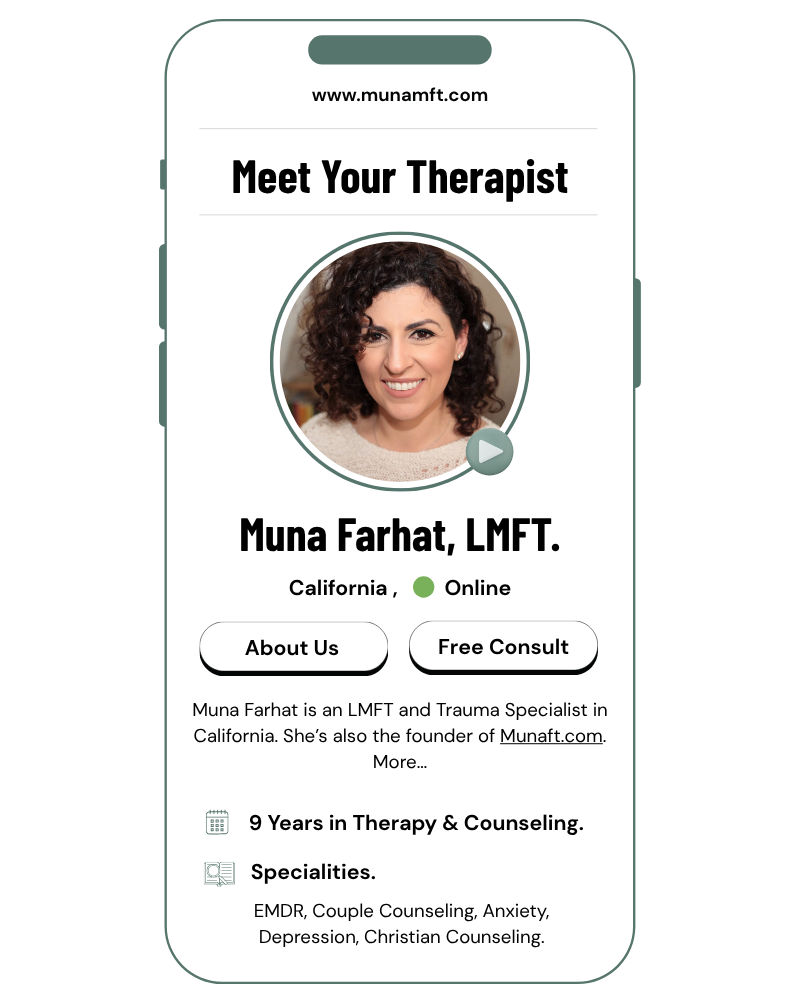

Our Experience
Keyword Ideas (anxiety therapist near me, anxiety and OCD therapist, online anxiety therapy California, social anxiety California, relationship anxiety therapist)
Have Questions? We’ve Answers for You.
Find answers to your questions about therapy, Muna’s services and specialization, Insurance, or privacy here.
Muna Farhat, LMFT is a Licensed Marriage and Family Therapist based in San Jose, CA.
She holds the necessary credentials to practice therapy in California, with expertise in supporting individuals, couples, and families through various emotional and relational challenges.
As a Licensed Marriage and Family Therapist, Muna adheres to strict confidentiality standards outlined by California state law and the Health Insurance Portability and Accountability Act (HIPAA).
Your personal information is securely stored and only shared with your explicit consent, except in legally mandated situations.
Therapy is a collaborative process where you work with a trained professional, like Muna, to address emotional, mental, or relational challenges. It can help you gain insight, develop coping strategies, and achieve personal growth or resolution of specific issues.
Counseling and therapy are often used interchangeably, but counseling typically focuses on specific issues or short-term goals (e.g., coping with a life transition), while therapy may involve deeper exploration of long-standing patterns. Muna offers both, depending on your needs.