
Types, Techniques and Benefits
Trauma can profoundly affect an individual’s mental, emotional, and physical well-being, often lingering long after the traumatic event has passed.
Trauma therapy offers a structured approach to help individuals process and heal from these experiences.
This blog explores the definition of trauma therapy, its various types, techniques, and efficacy, drawing from reputable sources to provide a comprehensive overview for those seeking to understand this critical aspect of mental health care.
Book a Free Consult with expert trauma recovery therapist, Muna Farhat, to start feeling better.

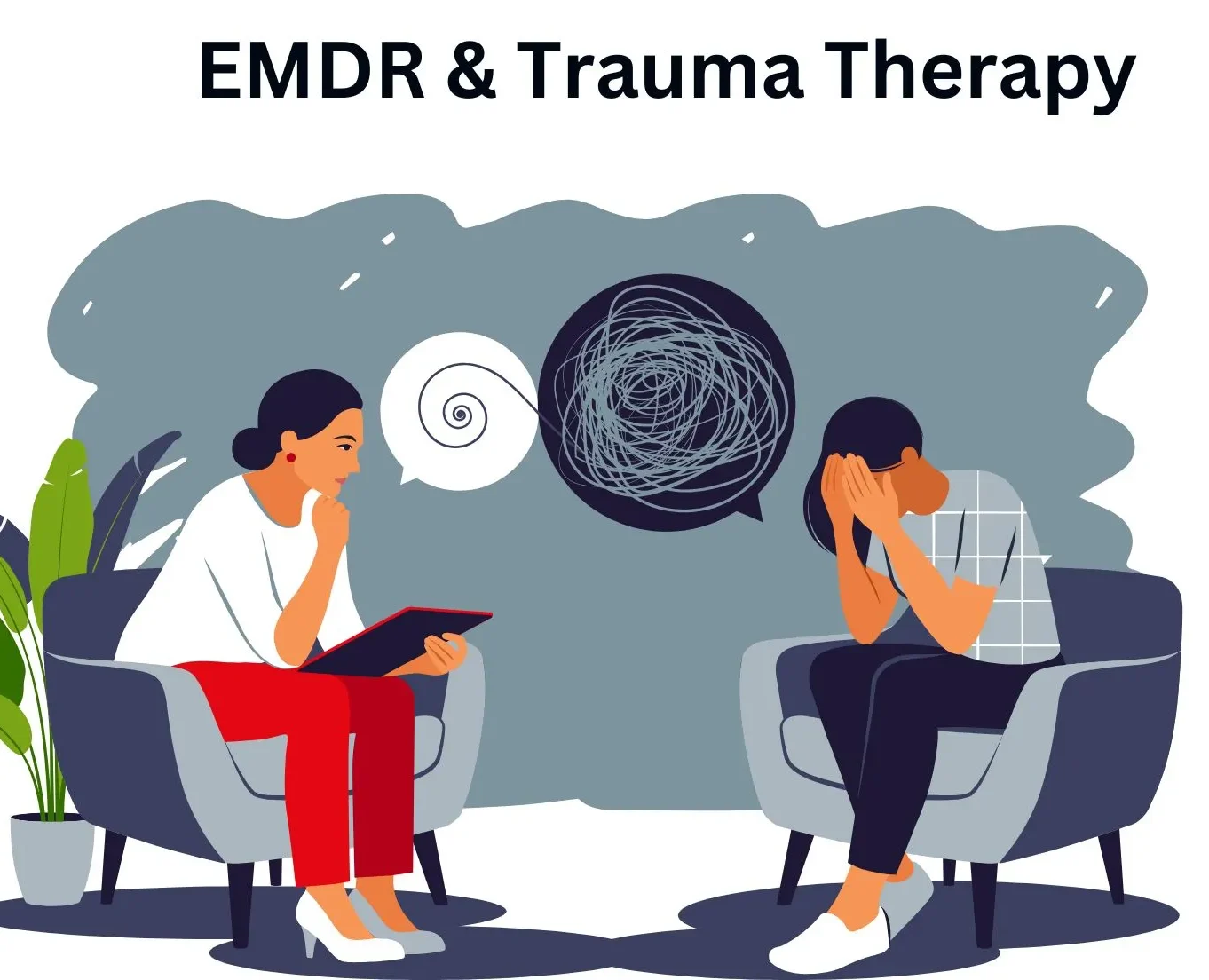
What Is & Trauma Therapy?
Trauma therapy is a specialized form of psychological treatment designed to help individuals cope with the aftermath of traumatic experiences.
Trauma can stem from events such as abuse, accidents, natural disasters, or witnessing violence, leading to symptoms like anxiety, flashbacks, or emotional numbness.
Unlike general therapy, trauma therapy focuses on addressing the unique ways trauma disrupts a person’s sense of safety and emotional stability.
The goal of trauma therapy is to help individuals process their experiences, reduce distressing symptoms, and regain control over their lives.
Therapists trained in trauma-informed care create a safe environment where clients can explore their emotions and memories without fear of judgment. This approach acknowledges the widespread impact of trauma and integrates that understanding into the therapeutic process.
Types of Trauma Therapy
Several evidence-based therapies have been developed to address trauma, each with its own techniques and focus. Below are some of the most widely recognized approaches.
Cognitive Behavioral Therapy (CBT)
Eye Movement Desensitization & Reprocessing (EMDR)
Prolonged Exposure Therapy (PE)
Narrative Exposure Therapy (NET)
Somatic Therapies
Techniques Used in Trauma Therapy
Trauma therapy employs a range of techniques tailored to the individual’s needs and the specific approach. Common techniques include:

- Psychoeducation: Therapists educate clients about trauma and its effects, helping them understand their symptoms and normalize their experiences. This knowledge empowers clients to engage actively in their healing.
- Grounding Exercises: Techniques like deep breathing, mindfulness, or focusing on sensory details (e.g., naming objects in the room) help clients stay present and manage overwhelming emotions during therapy.
- Desensitization: Through gradual exposure to trauma-related memories or triggers, clients learn to reduce their emotional reactivity, making these stimuli less distressing over time.
- Cognitive Restructuring: Clients identify and challenge unhelpful beliefs about the trauma, such as “It was my fault,” replacing them with more balanced perspectives.
- Body-Based Interventions: Techniques like progressive muscle relaxation or guided movement help clients release physical tension and reconnect with their bodies.
Therapists often combine these techniques, adapting them to the client’s progress and comfort level. The therapeutic relationship itself is a key component, providing a safe space for vulnerability and trust.
From Start to Finish: Therapy & Counseling in 3 Steps
1.
Book a free initial consultation to share your concerns and explore how therapy can support your mental health goals.
2.
After understanding your needs, your therapist will design a personalized therapy plan, incorporating approaches like CBT or mindfulness to address your unique challenges.
3.
Begin your therapy sessions—available in-person or online—with flexible scheduling options, and let your therapist guide you toward growth and emotional well-being.
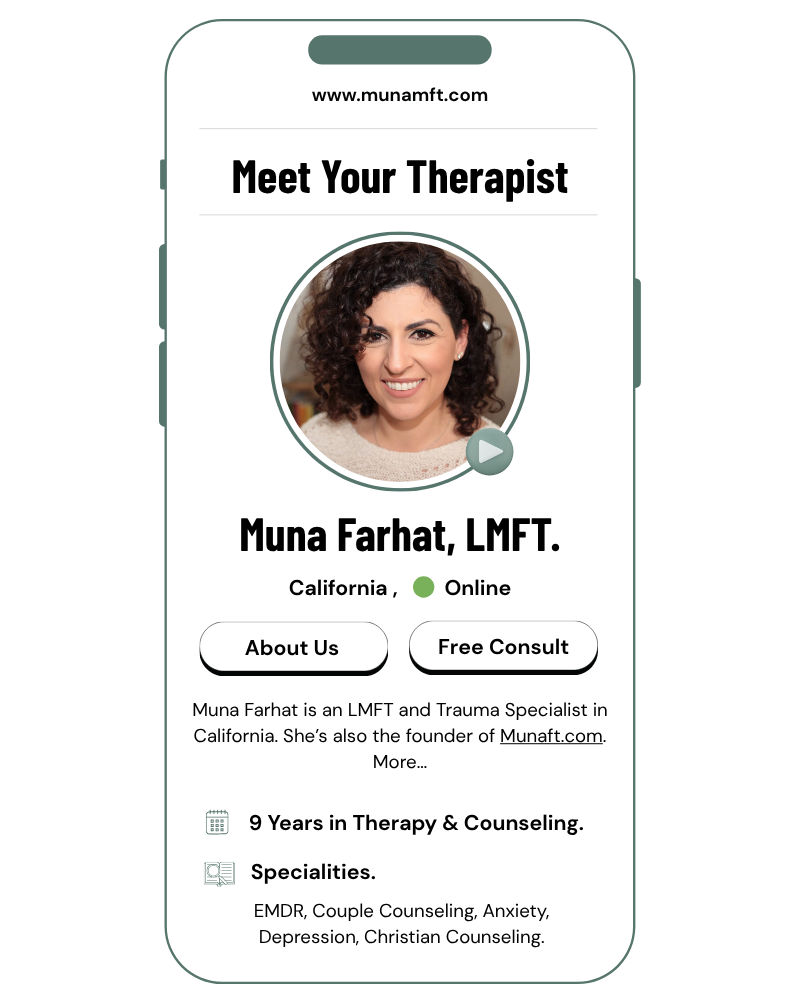

Our Experience
Keyword Ideas (anxiety therapist near me, anxiety and OCD therapist, online anxiety therapy California, social anxiety California, relationship anxiety therapist)
Have Questions? We’ve Answers for You.
Find answers to your questions about therapy, Muna’s services and specialization, Insurance, or privacy here.
Muna Farhat, LMFT is a Licensed Marriage and Family Therapist based in San Jose, CA.
She holds the necessary credentials to practice therapy in California, with expertise in supporting individuals, couples, and families through various emotional and relational challenges.
As a Licensed Marriage and Family Therapist, Muna adheres to strict confidentiality standards outlined by California state law and the Health Insurance Portability and Accountability Act (HIPAA).
Your personal information is securely stored and only shared with your explicit consent, except in legally mandated situations.
Therapy is a collaborative process where you work with a trained professional, like Muna, to address emotional, mental, or relational challenges. It can help you gain insight, develop coping strategies, and achieve personal growth or resolution of specific issues.
Counseling and therapy are often used interchangeably, but counseling typically focuses on specific issues or short-term goals (e.g., coping with a life transition), while therapy may involve deeper exploration of long-standing patterns. Muna offers both, depending on your needs.