




Sexual addiction, sometimes referred to as compulsive sexual behavior, is characterized by an overwhelming preoccupation with sexual thoughts, urges, or behaviors that persist despite negative consequences.
These behaviors may include excessive pornography consumption, extramarital affairs, or other compulsive sexual activities that disrupt daily life and relationships.
Unlike healthy sexual expression, sexual addiction is driven by a need to escape emotional discomfort or cope with stress, often leading to feelings of shame, guilt, and loss of control.
The impact of sexual addiction extends beyond the individual, deeply affecting their partner and the relationship’s foundation. Partners often experience feelings of betrayal, anger, and inadequacy, which can erode trust and intimacy.
The secrecy and deception that frequently accompany sexual addiction exacerbate these challenges, making open communication and mutual vulnerability difficult.
Sexual addiction can destabilize even the most resilient relationships. Partners may grapple with a range of emotions, including shock, grief, and self-doubt, as they process the reality of their loved one’s behavior.
The discovery of secretive actions, such as hidden affairs or excessive online activity, often feels like a profound betrayal, shattering the sense of safety and security within the relationship. This emotional upheaval can lead to hypervigilance, where partners feel compelled to monitor their loved one’s behavior, further straining the relationship.
The individual struggling with sexual addiction often faces internal struggles, which may be tied to past trauma, low self-esteem, or unresolved psychological issues.
Their behavior is typically not a reflection of their partner’s worth or desirability but rather an attempt to manage internal distress. However, this distinction can be difficult for partners to internalize, leading to feelings of rejection or blame.
The relational dynamics are further complicated by the differing needs of each partner during recovery.
The individual with the addiction may seek forgiveness and understanding, while their partner may need space to process their hurt and rebuild trust. Balancing these needs requires patience, empathy, and a willingness to engage in uncomfortable but necessary conversations.
Book a free initial consultation to share your concerns and explore how therapy can support your mental health goals.
After understanding your needs, your therapist will design a personalized therapy plan, incorporating approaches like CBT or mindfulness to address your unique challenges.
Begin your therapy sessions—available in-person or online—with flexible scheduling options, and let your therapist guide you toward growth and emotional well-being.

Keyword Ideas (anxiety therapist near me, anxiety and OCD therapist, online anxiety therapy California, social anxiety California, relationship anxiety therapist)
Find answers to your questions about therapy, Muna’s services and specialization, Insurance, or privacy here.
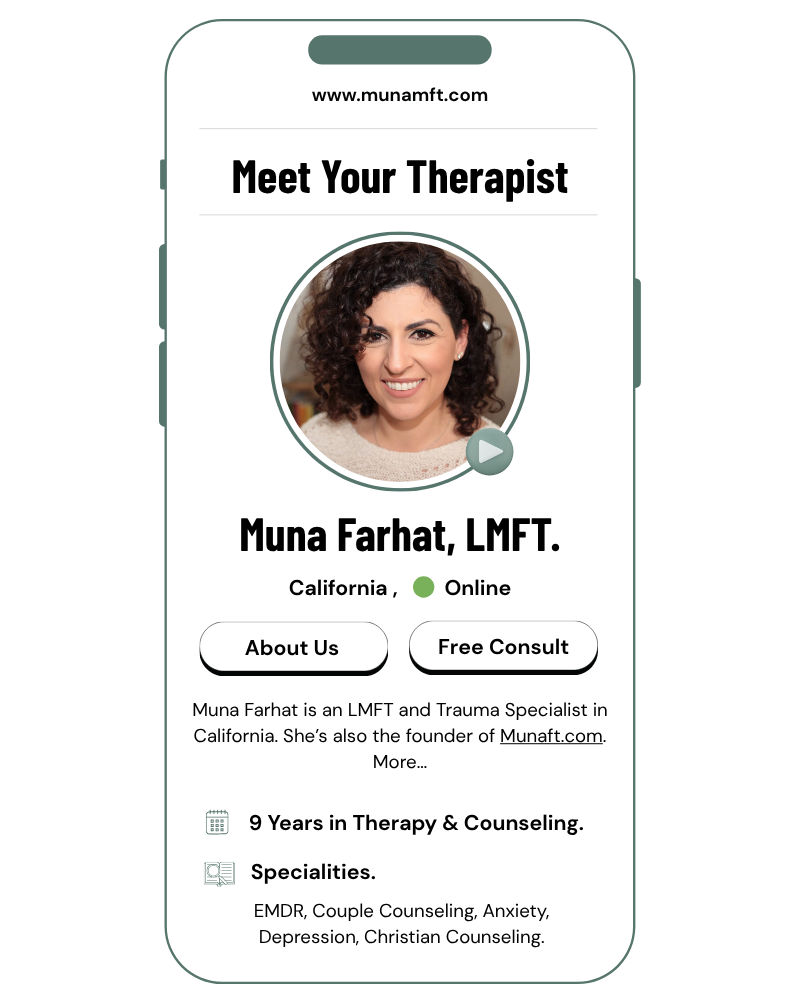
Muna Farhat, LMFT is a Licensed Marriage and Family Therapist based in San Jose, CA.
She holds the necessary credentials to practice therapy in California, with expertise in supporting individuals, couples, and families through various emotional and relational challenges.
As a Licensed Marriage and Family Therapist, Muna adheres to strict confidentiality standards outlined by California state law and the Health Insurance Portability and Accountability Act (HIPAA).
Your personal information is securely stored and only shared with your explicit consent, except in legally mandated situations.
Therapy is a collaborative process where you work with a trained professional, like Muna, to address emotional, mental, or relational challenges. It can help you gain insight, develop coping strategies, and achieve personal growth or resolution of specific issues.
Counseling and therapy are often used interchangeably, but counseling typically focuses on specific issues or short-term goals (e.g., coping with a life transition), while therapy may involve deeper exploration of long-standing patterns. Muna offers both, depending on your needs.